

A severe storm can make your roof look perfectly normal while hiding damage that may not become obvious for weeks or months. High winds can loosen or lift shingles, hail can bruise roofing materials, heavy rain can expose weak areas, and falling branches or debris can cause cracks, punctures, or structural damage. Some problems are easy to spot immediately, while others can gradually lead to leaks, trapped moisture, mold, or more costly repairs.
For a homeowner, knowing the common causes and warning signs of roof storm damage can help you take action before a small problem becomes a major one. In this guide, you’ll learn what causes roof storm damage, signs to look for, what to do immediately, and how to work through a practical roof storm damage inspection checklist.
What Causes Roof Storm Damage?
Storm damage does not come from one type of weather event. Wind, rain, hail, falling branches, debris, and severe storms affect different parts of a roofing system. The type and severity of damage also depend on the roofing material, its age, installation quality, and the condition of the roof before the storm.
High Winds
Strong winds put significant stress on roofing materials by creating upward forces that can lift, loosen, or displace shingles and other components. According to the Insurance Institute for Business & Home Safety (IBHS), wind can exploit existing weaknesses in a roof and start a chain of damage that creates opportunities for water to enter. Common signs of wind damage include missing or lifted shingles, displaced tiles, damaged flashing, loose metal components, and roofing debris around the property. Damage often starts in vulnerable areas such as roof edges, corners, ridges, and areas around vents or other penetrations. Even one lifted shingle can create an opening for rainwater to reach the layers underneath.
Hail
Hail is less common in San Diego than in many inland or central U.S. regions, but it can still damage roofing materials when it occurs. The severity of hail damage depends on factors such as the size, mass, hardness, and speed of the hailstone. Hail can dent asphalt shingles and tear or displace their protective granules. On tile roofs, large hailstones can crack or break individual tiles. Hail damage is not always easy to see immediately, but impacts can weaken the roofing surface and affect its ability to shed water.
Heavy Rain and Wind-Driven Rain
Heavy rainfall can cause roof damage when water reaches existing weak or damaged areas in the roofing system. Missing shingles, cracked tiles, damaged flashing, exposed underlayment, clogged drainage paths, and damaged roof penetrations can create openings where water enters beneath the roof covering. Wind-driven rain can cause even more problems because strong winds push water into gaps, seams, and openings that normal rainfall might not reach. Once moisture gets beneath the roof covering, it can soak the underlying materials and insulation, leading to leaks and water damage inside the home. Over time, repeated exposure to heavy rain can worsen existing roofing damage, weaken materials, and increase the risk of moisture reaching the roof deck and interior areas.
Falling Trees and Branches
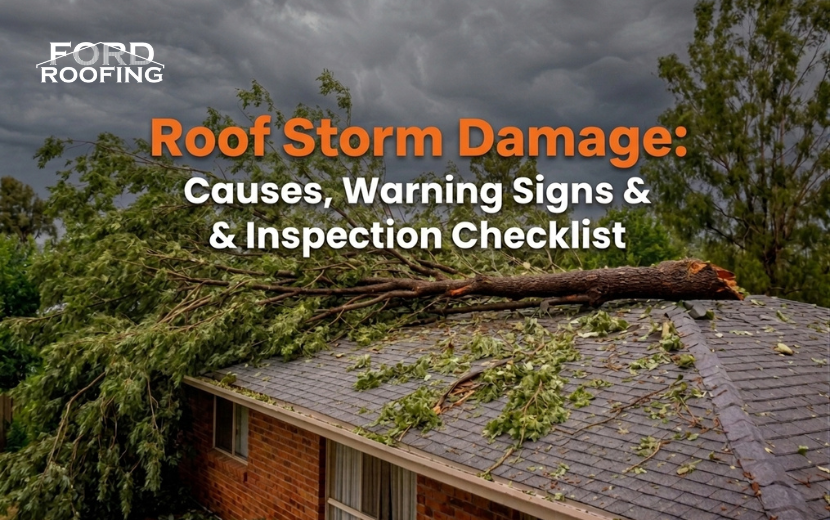
Strong winds can cause tree branches and entire trees to break or fall onto a roof, creating significant damage. A falling branch can crack concrete or clay tiles, puncture membrane roofing, tear or dislodge shingles, bend flashing, or damage the roof structure underneath. Larger branches and trees can cause more extensive structural damage because of their weight and impact force. Even smaller branches can damage vulnerable roofing components when they strike the roof at high speed during a storm. The severity of the damage depends on the size and weight of the tree or branch, the height from which it falls, and the part of the roof it hits. Repeated impacts from smaller branches and debris can also weaken roofing materials over time.
Debris Impact
Storm debris can damage a roof when strong winds pick up loose objects and throw them against roofing materials. Patio furniture, outdoor equipment, loose building materials, tree limbs, and other objects can strike the roof with enough force to cause physical damage. The impact can crack or break tiles, puncture membrane roofing, tear or loosen shingles, dent metal components, bend flashing, or damage roof vents. Some impacts only damage the visible surface, while stronger impacts can penetrate deeper and affect the waterproofing layers or roof deck underneath, creating pathways for water to enter the roofing system.
Warning Signs of Roof Storm Damage
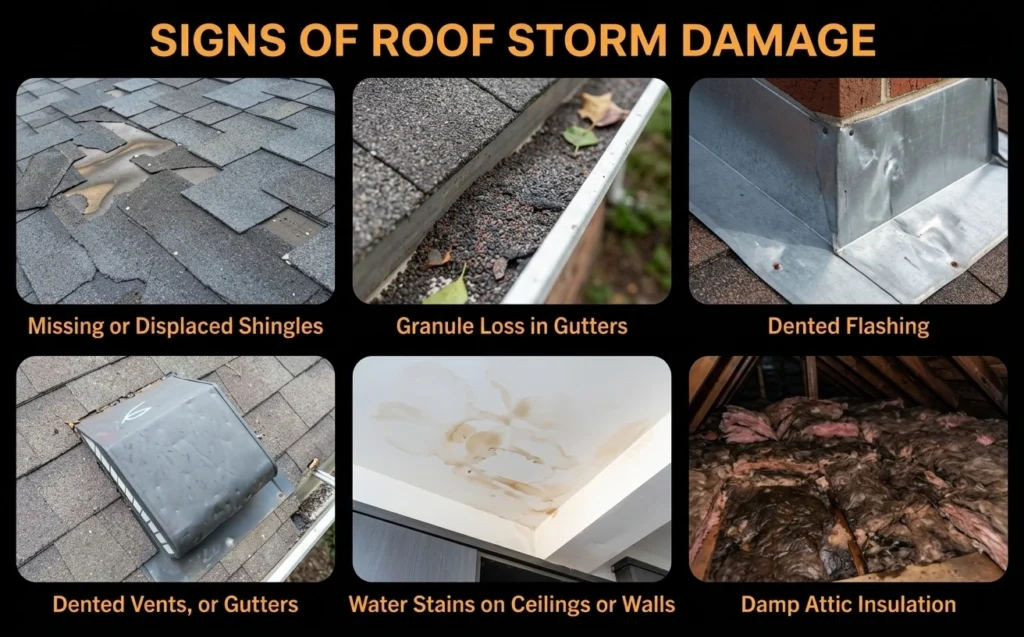
Recognizing the early signs of storm damage can help you address roof problems before they lead to leaks, structural damage, or costly repairs. Some damage is easy to spot, while other signs can appear in your gutters, attic, ceilings, or walls after the storm has passed.
Here are the key warning signs to look for after severe weather:
Missing or Displaced Shingles
Missing shingles are one of the easiest signs of storm damage to spot. Strong winds can lift shingles at the edges, loosen the fasteners underneath, or tear them completely off the roof. After a storm, you may notice bare patches on the ground or find shingles and pieces of roofing material in your yard. A shingle might still be attached but look lifted, shifted, or sitting unevenly instead of lying flat against the roof. Even if it doesn’t look badly damaged, a loose shingle can allow water to get underneath it during the next rainfall.
A few missing or displaced shingles in one area can be repairable. But if damage is spread across several sections of the roof, especially after a major windstorm, it’s worth having the entire roof inspected.
Granule Loss in Gutters
Granules are small, sandy particles that cover asphalt shingles. They protect the shingles from sunlight and help the roof withstand normal weathering. After a severe storm, especially one involving hail or heavy rain, you may notice an unusual amount of granules collecting in your gutters or downspouts.
Some granule loss is normal as shingles age, so a small amount doesn’t automatically mean storm damage. What matters is a sudden increase after severe weather or large piles that weren’t there before. Heavy granule loss can expose the shingles underneath and cause them to wear faster.
Dented Flashing, Vents, or Gutters
Hail can damage more than just your shingles. Large hailstones can leave dents, cracks, or impact marks on metal components, including flashing, roof vents, gutters, and downspouts. These areas are worth checking after a hailstorm because damage may be easier to spot on metal than on shingles.
Pay particular attention to flashing around chimneys, skylights, and vents. Bent or damaged flashing can create openings that allow water into the roof system. New dents in your gutters or vents can also be a clue that the roof itself experienced similar impact damage during the storm.
Water Stains on Ceilings or Walls
Water stains inside your home are often a sign that storm damage has created a roof leak. After heavy rain, check ceilings and walls for new yellow, brown, or dark stains, particularly in rooms directly underneath the roof. You may also notice peeling paint, bubbling drywall, or damp areas around ceiling fixtures. These signs can appear during the storm or several days afterward, depending on how water travels through the roof system.
Storm damage around a shingle, flashing, or vent can be repairable. But recurring leaks or multiple stains usually deserve a thorough inspection.
Damp Attic Insulation
Your attic can reveal storm damage before it becomes obvious inside your living space. After severe weather, check the insulation beneath the roof for damp or flattened areas. You may also notice water stains on the roof decking, wet wood, or a musty smell. Damp insulation means water has likely made its way through the roof system. If it stays wet, it can lose its insulating ability and contribute to mold growth or wood rot.
Even if the insulation dries later, the leak may still be present. Water can travel along decking or framing before settling elsewhere. If you find damp insulation after a storm, you should have the roof and attic inspected.
How El Niño Can Affect Roof Storm Damage Risk
El Niño can increase roof storm damage risk in San Diego by bringing wetter winter conditions and increasing the potential for heavier rainfall and strong storms. NOAA research shows that El Niño’s influence on precipitation becomes stronger later in the winter and is more pronounced in Southern California. Since San Diego receives most of its annual rainfall during the winter, roofs can face longer periods of moisture and repeated exposure to storm conditions. Heavy rainfall can put existing roofing problems under greater stress, allowing water to enter through cracked tiles, damaged shingles, worn flashing, or poorly sealed areas. Strong winds during storms can also lift loose shingles, damage flashing, and push rain into vulnerable parts of the roof.
Repeated exposure to rain and wind can also turn minor roofing issues into leaks or more serious storm damage. Poor drainage can add to the problem by allowing water to collect around vulnerable areas instead of draining away properly. You should prepare your roof for El Niño conditions by checking for damaged materials, clearing gutters and drainage areas, and fixing weak spots before heavy storms arrive. Taking these steps before the wetter season can help reduce the risk of leaks and limit the extent of storm-related roof damage.
What Steps to Take Immediately After a Storm
Once the storm has passed, taking the right steps can help protect your home from additional damage and make it easier to address repairs. Start with a safe visual check, document what you find, and look for signs of water intrusion before contacting a roofing professional or your insurance company.
- Check Your Roof From the Ground: Once the storm passes, walk around your home and look for missing shingles, fallen branches, damaged flashing, or visible holes. Avoid climbing onto the roof, especially when it’s wet or damaged. Take photos of anything unusual from a safe distance so you can share them with a roofing professional.
- Inspect Your Attic for Signs of Leaks: Check your attic for damp insulation, water stains, wet wood, or a musty smell. Look carefully around vents, valleys, chimneys, and other roof penetrations where leaks commonly start. Finding moisture early can help prevent damage to the insulation, decking, drywall, and other parts of your home.
- Document Any Visible Damage: Take clear photos and videos of roof damage, damaged gutters, fallen branches, ceiling stains, and other storm-related problems. Capture both close-up images and wider shots showing where the damage is located. Good documentation can help a roofing contractor assess the situation and may also be useful when filing an insurance claim.
- Prevent Further Water Damage: If you notice an active leak, place buckets underneath dripping areas and move furniture or valuables away from the water. Avoid touching electrical fixtures near water. A professional may recommend temporary protection, such as a tarp, but don’t climb onto the roof yourself to install one.
- Contact a Roofing Professional: Schedule a professional roof inspection after significant storm damage, even if you don’t notice an obvious leak. Hail damage, lifted shingles, damaged flashing, and weakened decking can be difficult to spot from the ground. A roofing professional can determine whether your roof needs a simple repair or more extensive work.
- Contact Your Insurance Company if Needed: If your roof has significant storm damage, contact your insurance company to ask about coverage and claim requirements. Make sure to keep your photos, inspection reports, estimates, and receipts organized. Follow your insurer’s instructions and, if required, allow an adjuster to inspect the damage before making permanent repairs.
Roof Storm Damage Inspection Checklist
Not sure what to check after a storm? Download our Roof Storm Damage Checklist for a simple step-by-step guide to spotting visible damage, checking for leaks, documenting problems, and knowing when to schedule a professional inspection.
When should you call a roofer after a storm?
If a storm has just passed and you’re wondering whether it’s worth calling a roofer, honestly, it’s better to get someone to take a look sooner rather than later. If you notice missing shingles, cracked tiles, damaged flashing, fallen branches, a new leak, or moisture inside your home, those are pretty clear signs that your roof needs attention before the next rainfall makes things worse.
Even if everything looks normal from the ground, a severe storm with hail, high winds, or falling debris can cause damage that isn’t easy to spot. That doesn’t automatically mean you need a new roof, either. A few cracked tiles or a small, localized leak only need a simple repair, while widespread damage, an aging roof, or ongoing repair issues could make replacement the better option. The important thing is to have the roof checked and base the decision on its actual condition rather than the fact that a storm came through.
Conclusion
A storm can leave your roof with more than what you can see from the ground. A missing shingle, cracked tile, loose flashing, or small leak may not seem like a big deal at first, but these issues can give water a way into the roof and cause more damage over time. That’s why it’s worth checking for the less obvious signs, especially after strong winds, hail, heavy rain, or falling debris.
If your roof has been through a severe storm, a professional inspection can help you assess the damage and determine what to do next. Ford Roofing offers free roof inspections, straightforward quotes, and reliable repair and replacement services for homes and businesses throughout San Diego County. Our team can inspect your roof for storm-related damage, identify areas that need attention, explain your repair or replacement options, and help protect your home from further problems. Contact Ford Roofing today to have your roof inspected and get a clear plan for moving forward.