Sometimes a roof leak doesn’t show itself until the damage underneath has already started spreading into the wood structure below the tile.
This tile roof repair in Del Mar started after ongoing leaking around a vulnerable roof section led to moisture intrusion and wood rot beneath the system.
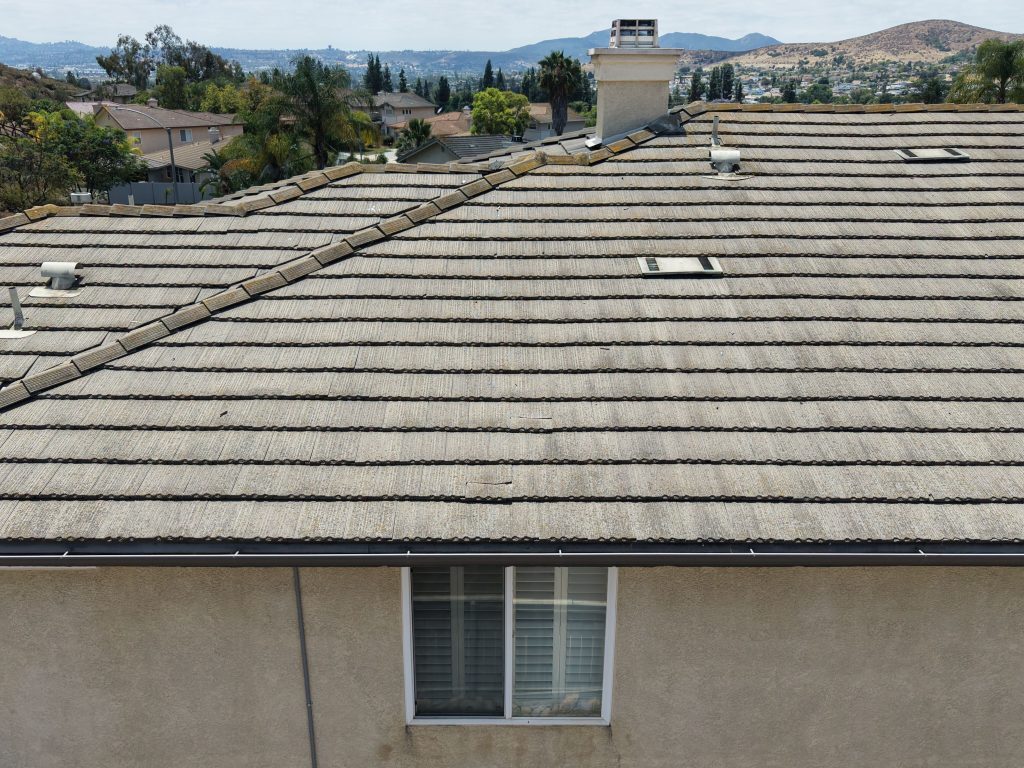
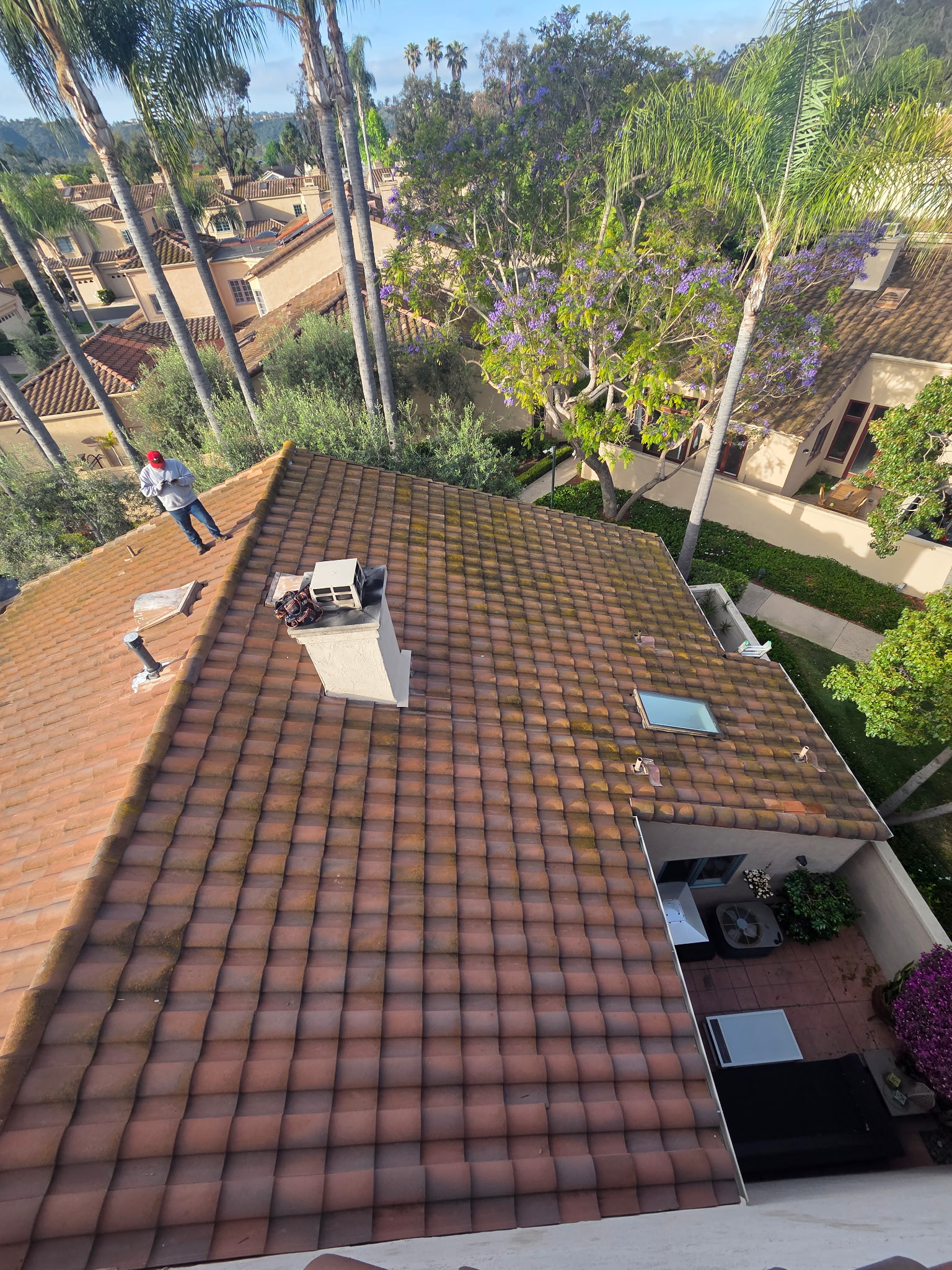
From the exterior, the roof still looked relatively intact.
But once we opened the affected area, the hidden damage became obvious.
The Problem
This section of roof had been allowing water intrusion over time, especially around a transition and valley area where water flow concentrates during heavy rain.
What we found included:
- Deteriorated underlayment beneath the tile
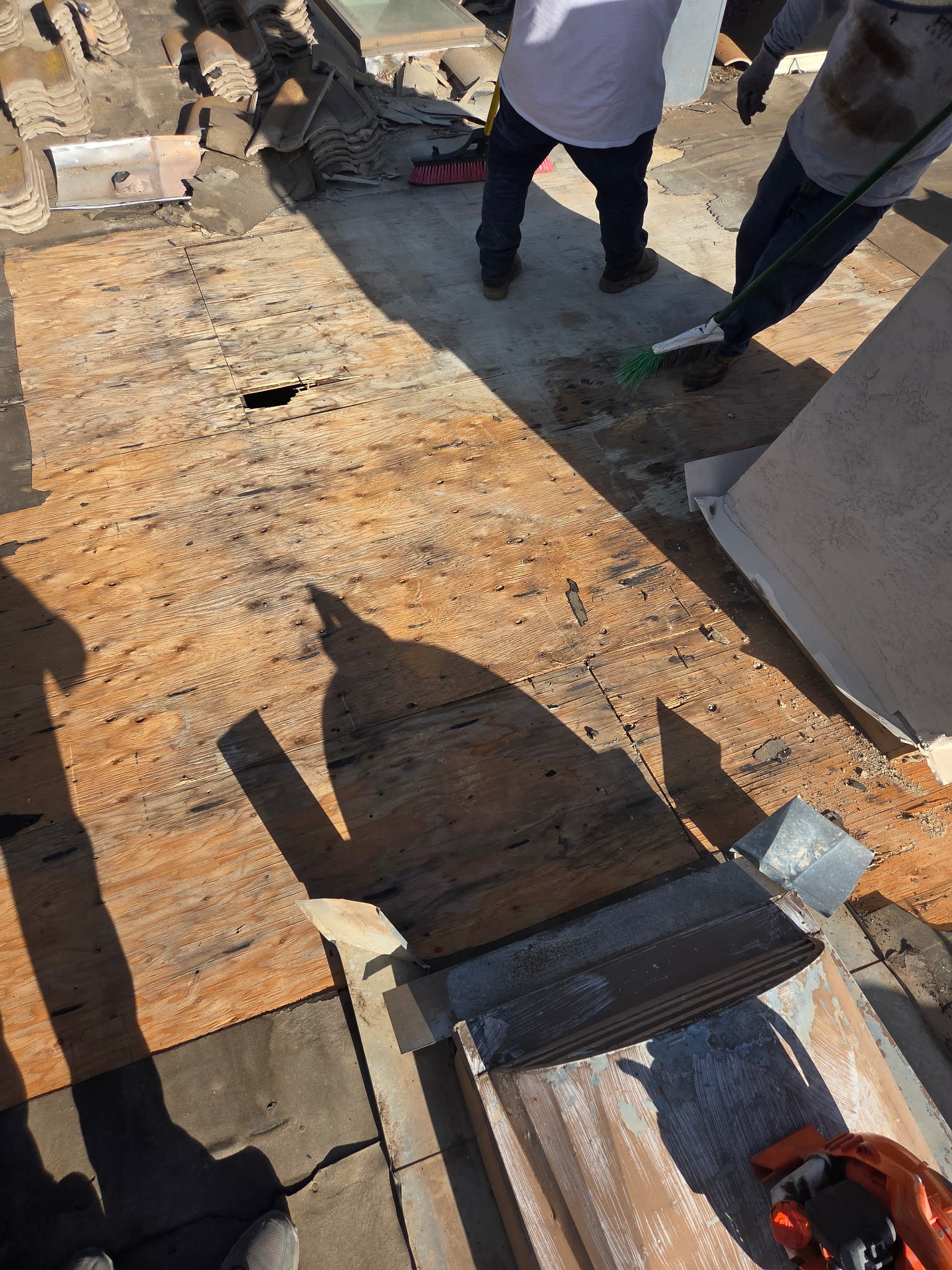
- Moisture damaged plywood decking
- Wood rot caused by prolonged leaking
- Vulnerable flashing details
- Aging waterproofing materials near the chimney and transitions
Tile roofs are designed to shed water, but the real waterproofing layer is underneath the tile itself.
When that underlayment system begins failing, leaks can quietly spread into the decking long before major interior signs appear.
What We Found After Opening the Roof
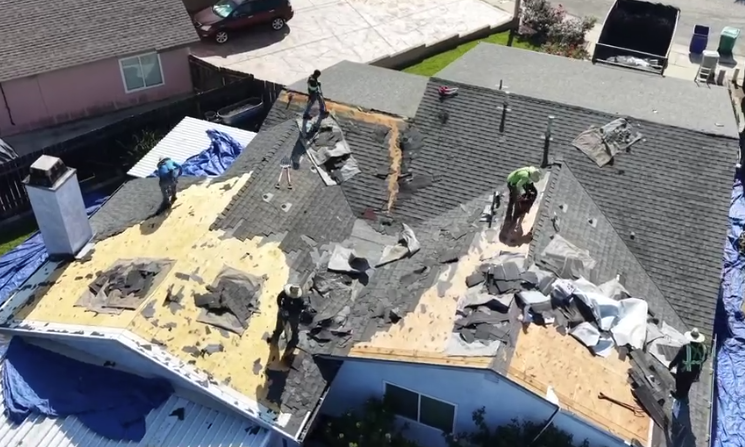
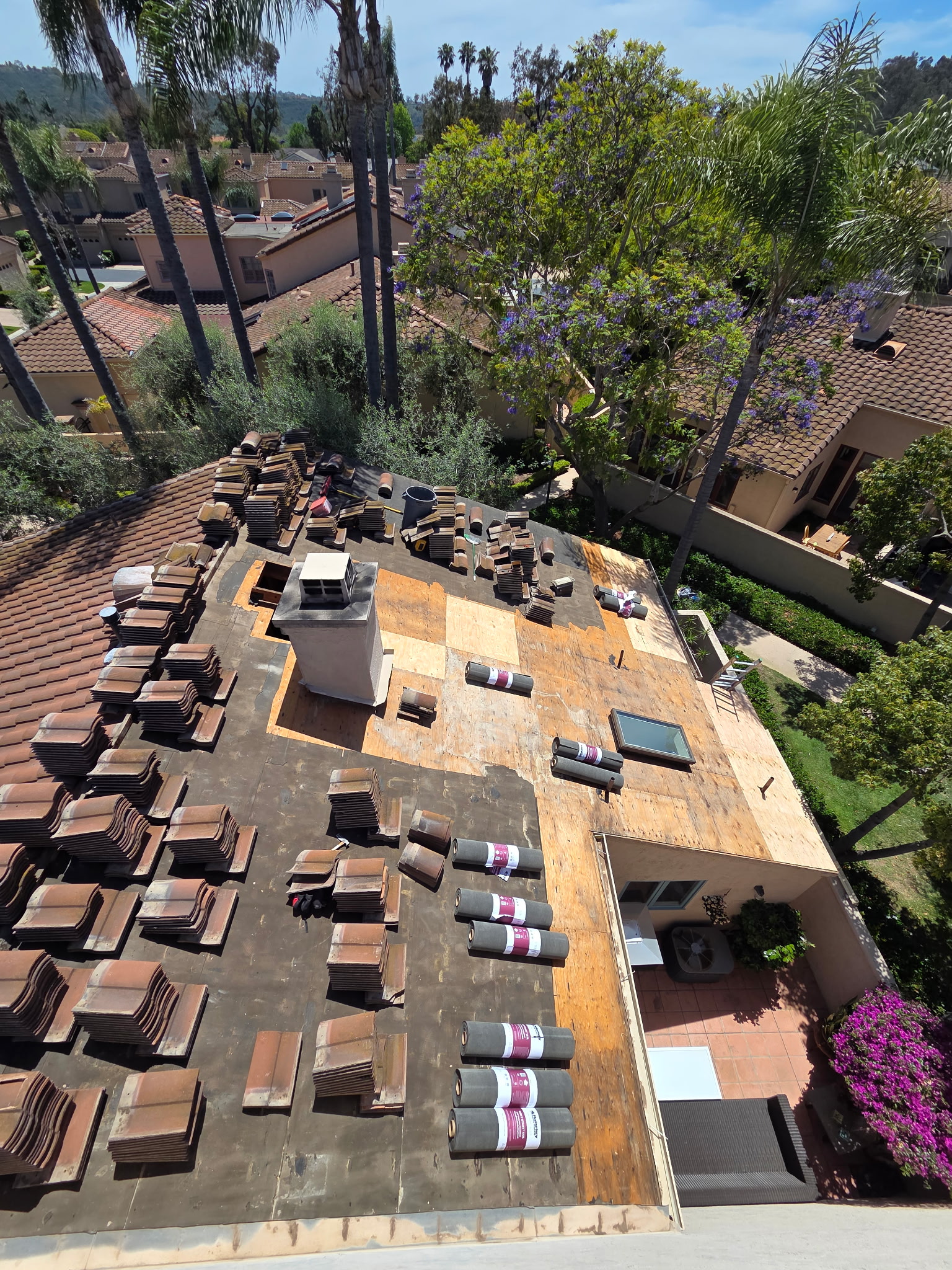
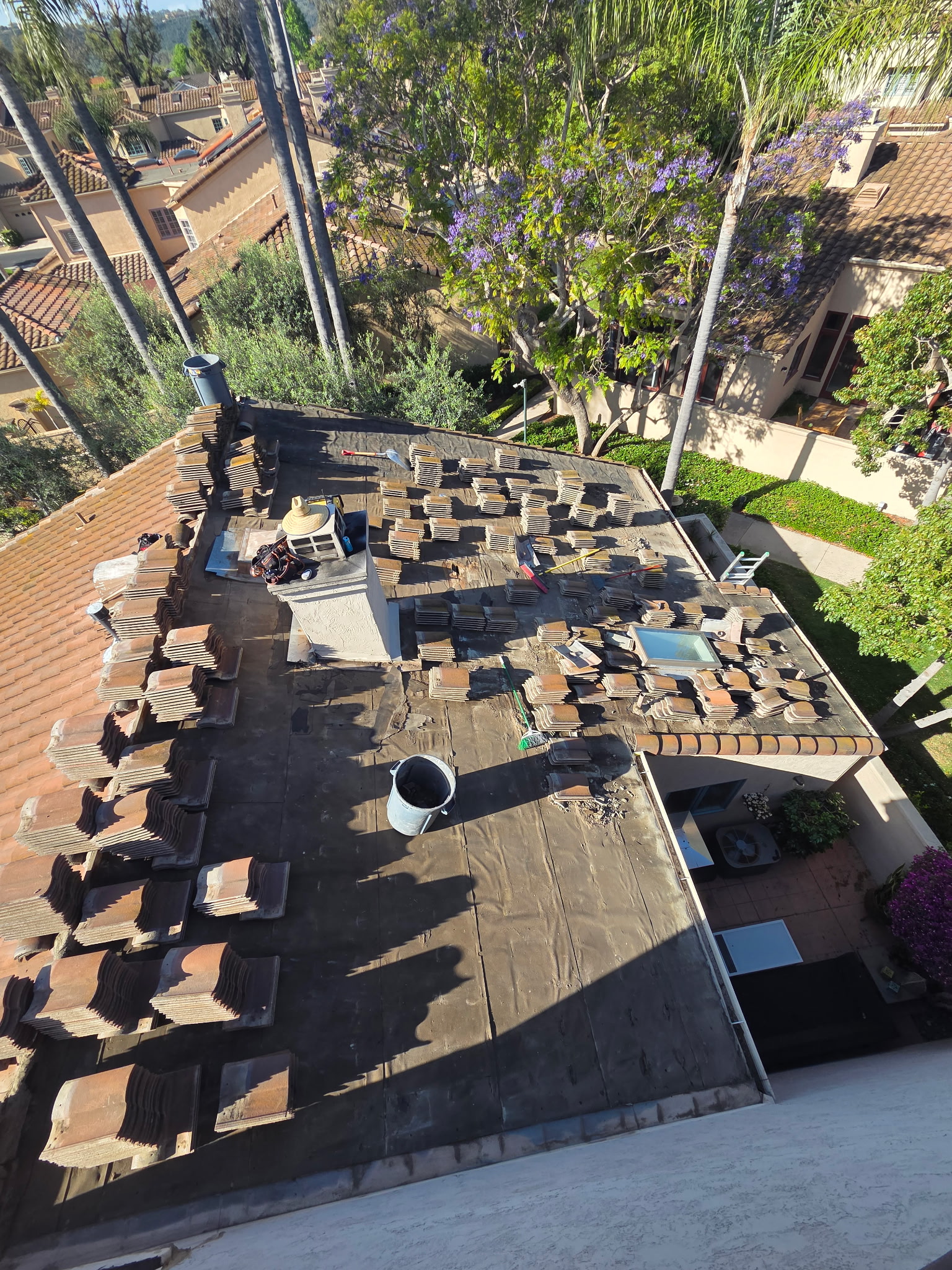
Once the tile was carefully removed and the affected section exposed, we found multiple areas of damaged wood that needed replacement.
The leak had been active long enough for moisture to deteriorate portions of the plywood decking around the affected area.
We also found:
- Brittle older underlayment
- Weak areas surrounding the transition details
- Water staining and deterioration around the leak path
- Sections where the waterproofing system had clearly broken down over time
This wasn’t just a simple tile adjustment.
The roofing system underneath had failed and the damaged wood needed to be rebuilt correctly before reinstalling the roof.
The Repair Process
1. Tile Removal
- Carefully removed existing concrete tile for reuse where possible
- Opened the affected roof section completely
- Exposed damaged decking and underlayment
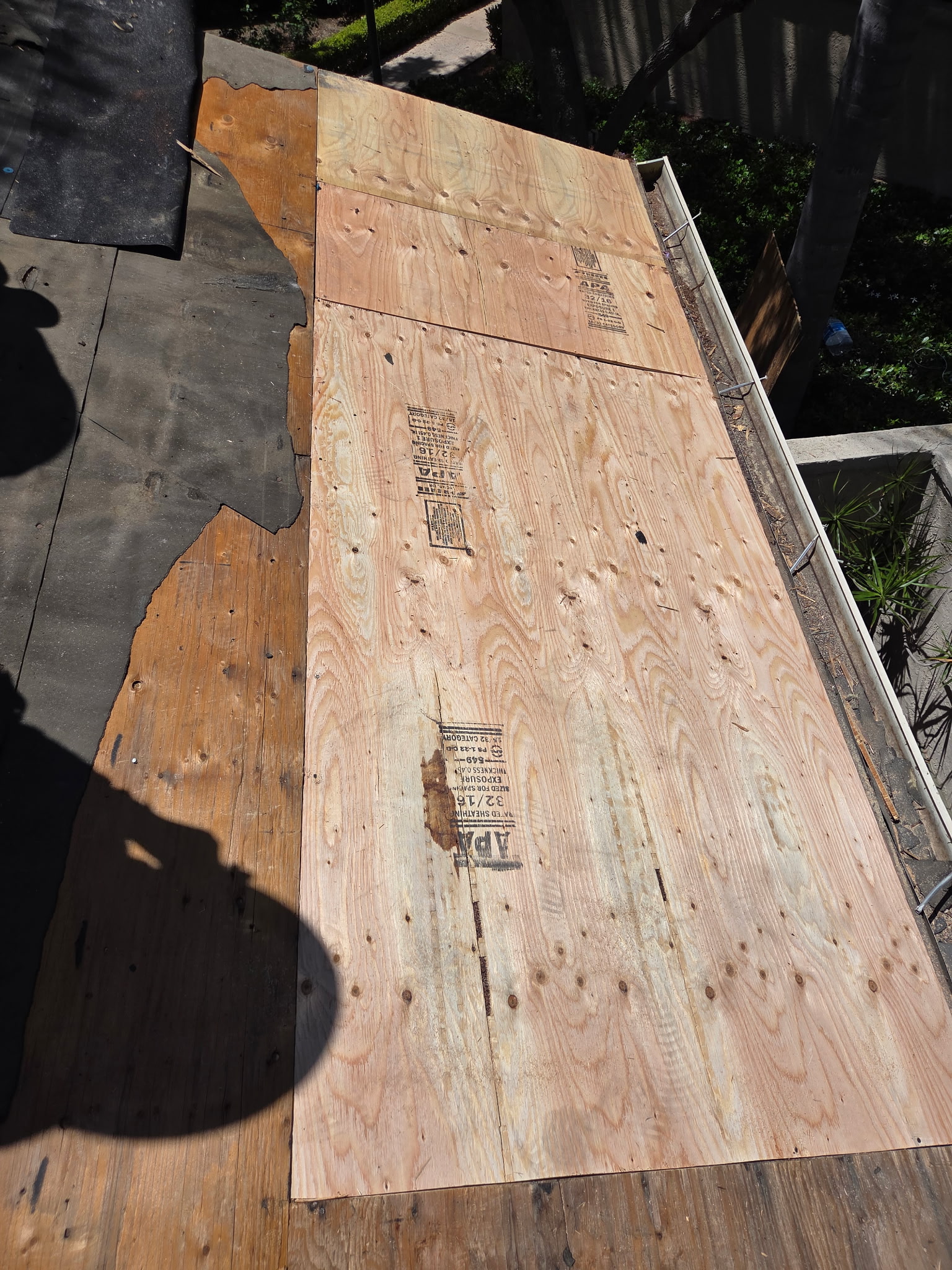
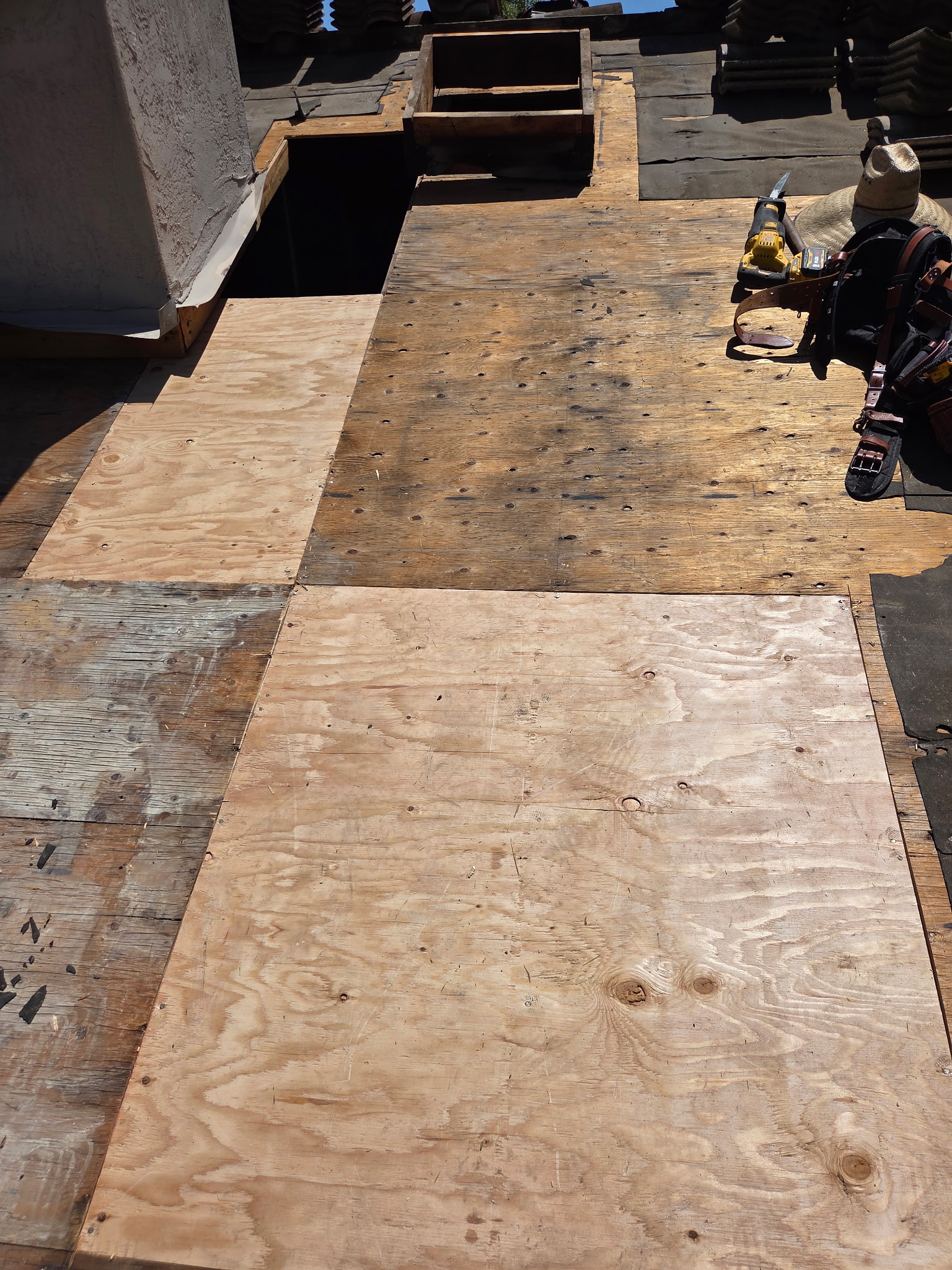
2. Wood Rot Repair
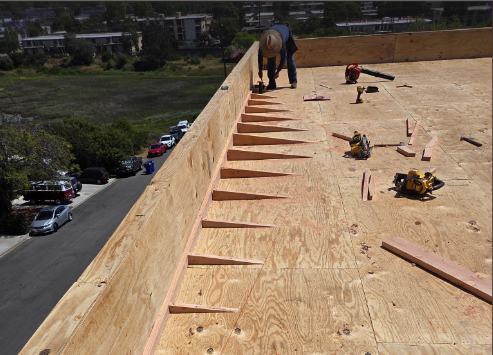
- Removed moisture damaged plywood
- Installed new plywood decking
- Rebuilt compromised areas to restore structural integrity
3. Waterproofing Replacement
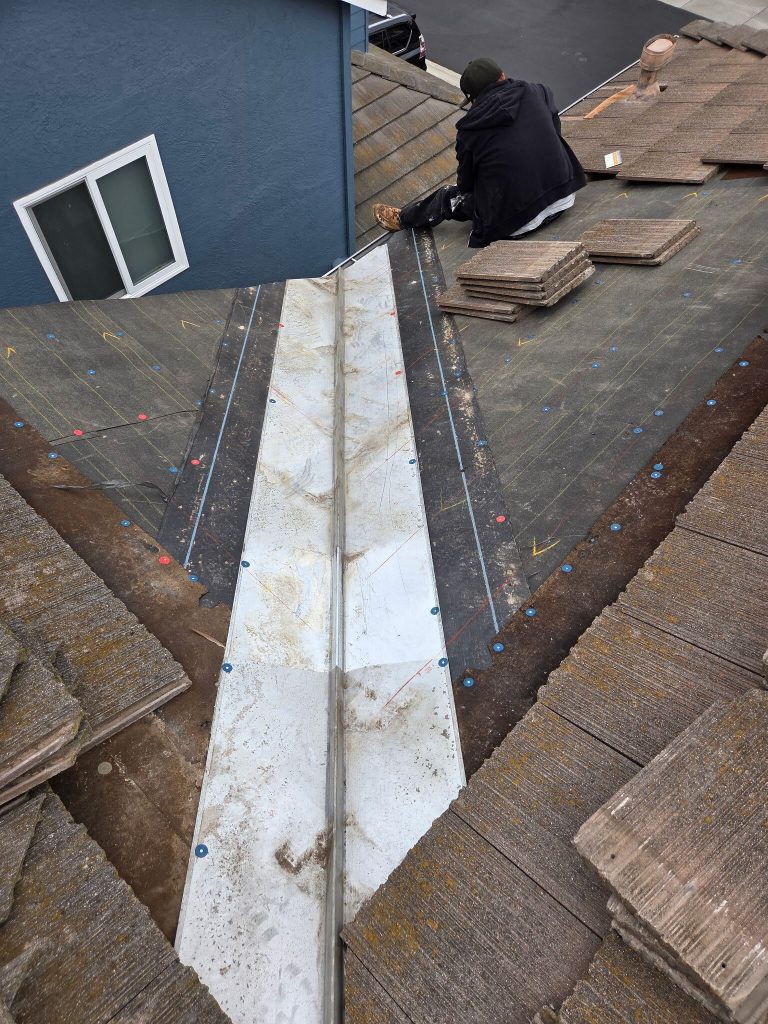
- Installed new underlayment in the repaired section
- Properly integrated flashing and waterproofing details
- Reinforced vulnerable transition areas
4. Tile Reset
- Reinstalled original tile
- Blended the repair naturally into the existing roof system
- Restored proper water shedding through the repaired area
The Result
From the ground, the repair blends naturally into the existing tile roof.
But underneath:
- The damaged wood has been replaced
- The leak source has been repaired
- The waterproofing system has been rebuilt correctly
- The vulnerable section is now properly protected from future water intrusion
That’s the difference between patching symptoms and actually repairing the roofing system itself.
Why Wood Rot Repairs Matter
When roof leaks are left unresolved, moisture can slowly spread into the decking and structural components beneath the roof.
Over time, that can lead to:
- Expanding wood rot
- Interior water damage
- Mold and moisture issues
- Larger structural repairs
- Much higher repair costs later on
Catching these problems early can often prevent a much larger reroof project down the road.
No Job Too Small
Not every roofing issue requires a full replacement.
Sometimes the right solution is:
- Finding the true leak source
- Replacing the damaged wood properly
- Rebuilding the waterproofing system correctly
- Extending the life of the existing roof
If you’ve noticed signs of leaking, staining, or soft wood around your roof system in Del Mar, it’s worth having the area inspected before the damage spreads further.