On flat roofs, water is everything. Not just keeping it out, but controlling where it goes. A cricket is one of the simplest ways to do that right.
What a Cricket Is
A cricket is a small raised slope built into a flat roof system. It is usually installed behind a wall, curb, or any obstruction that would otherwise trap water. Instead of letting water sit and pond, the cricket splits the flow and pushes it toward drains or scuppers.
Why It Matters
1. Prevents Ponding Water
Flat roofs are not truly flat. They rely on slope to move water. When water sits, it accelerates wear on the membrane, increases the chance of leaks, and adds unnecessary weight to the structure. A cricket keeps water moving.
2. Protects Transitions and Penetrations
The most vulnerable areas on a roof are where things change. Walls, parapets, skylights, and equipment curbs. Without a cricket, water collects at these points and works its way into seams. With a cricket, water is redirected before it becomes a problem.
3. Extends Roof Life
Consistent drainage means less breakdown of materials. Whether it is torch down, TPO, or PVC, keeping water off the surface is one of the biggest factors in long term performance.
4. Cleaner, More Professional System
A roof that drains properly just looks right. No staining, no low spots, no callbacks. It shows the system was thought through, not just installed.
What You Are Seeing Here
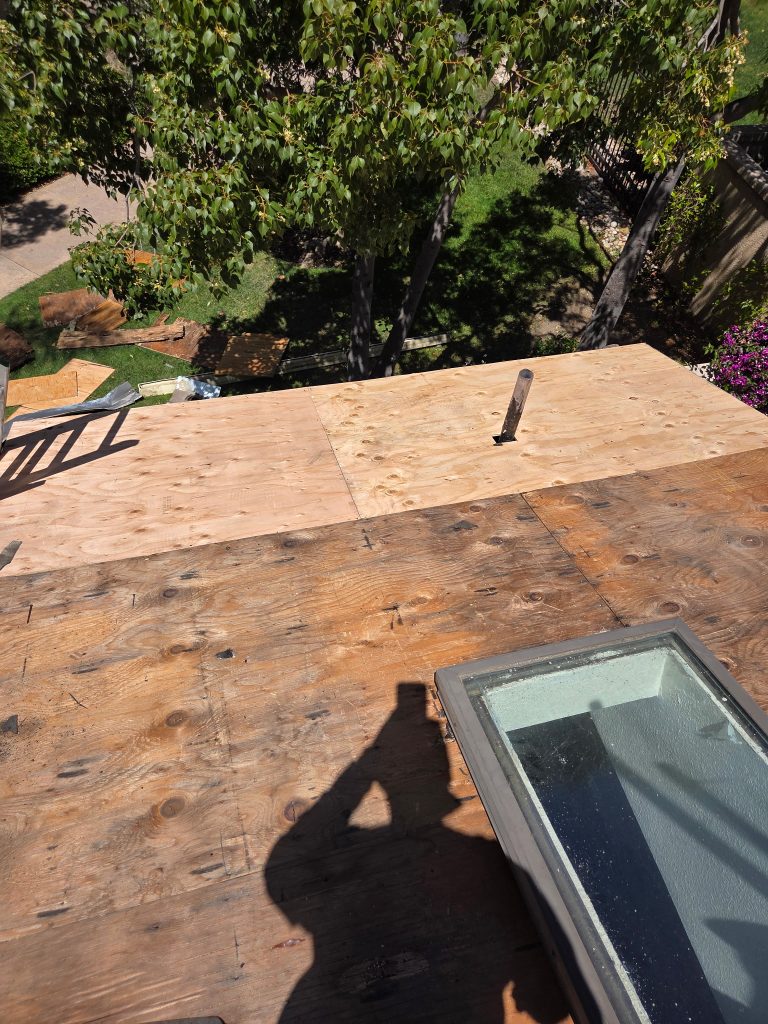
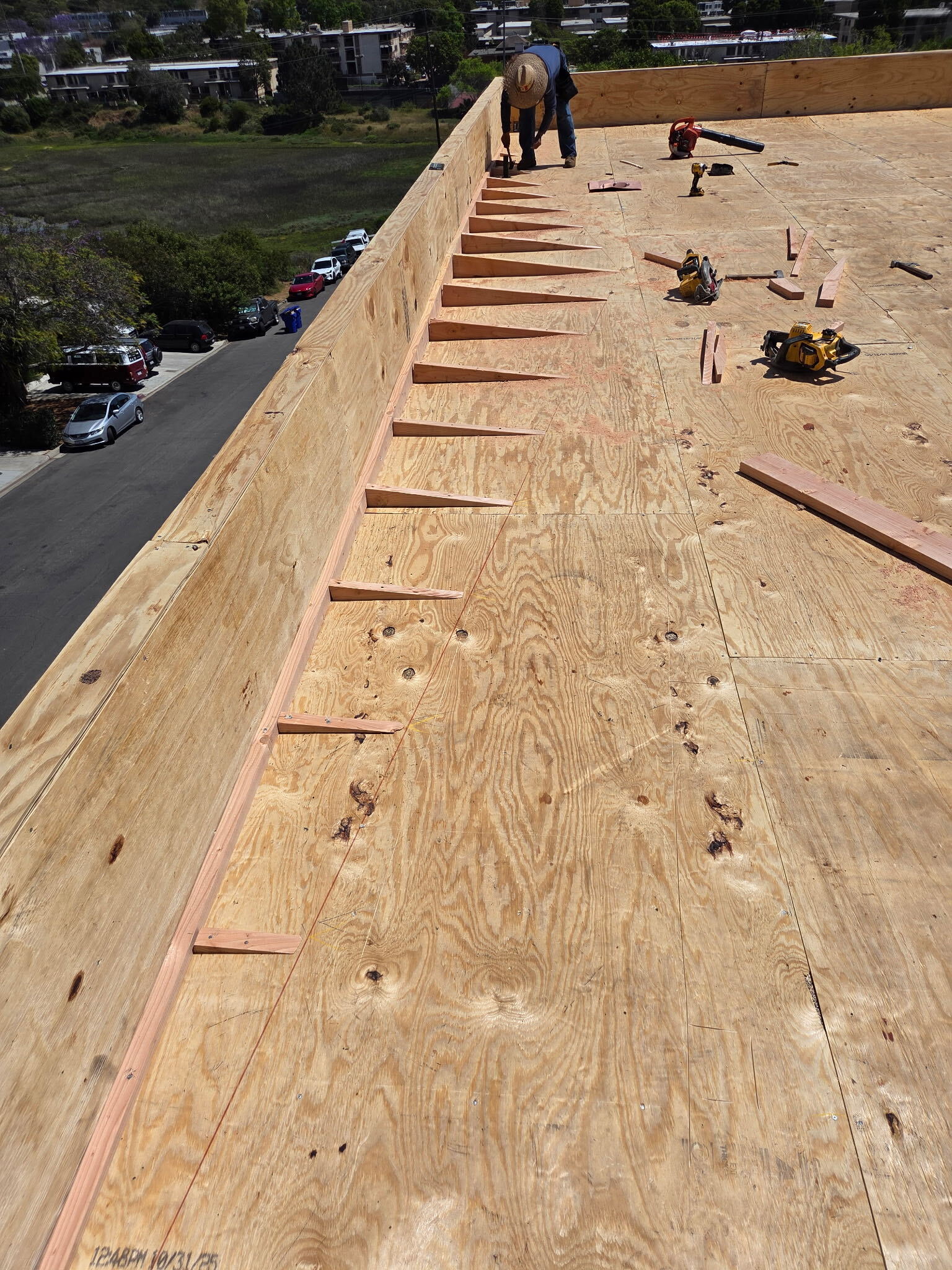
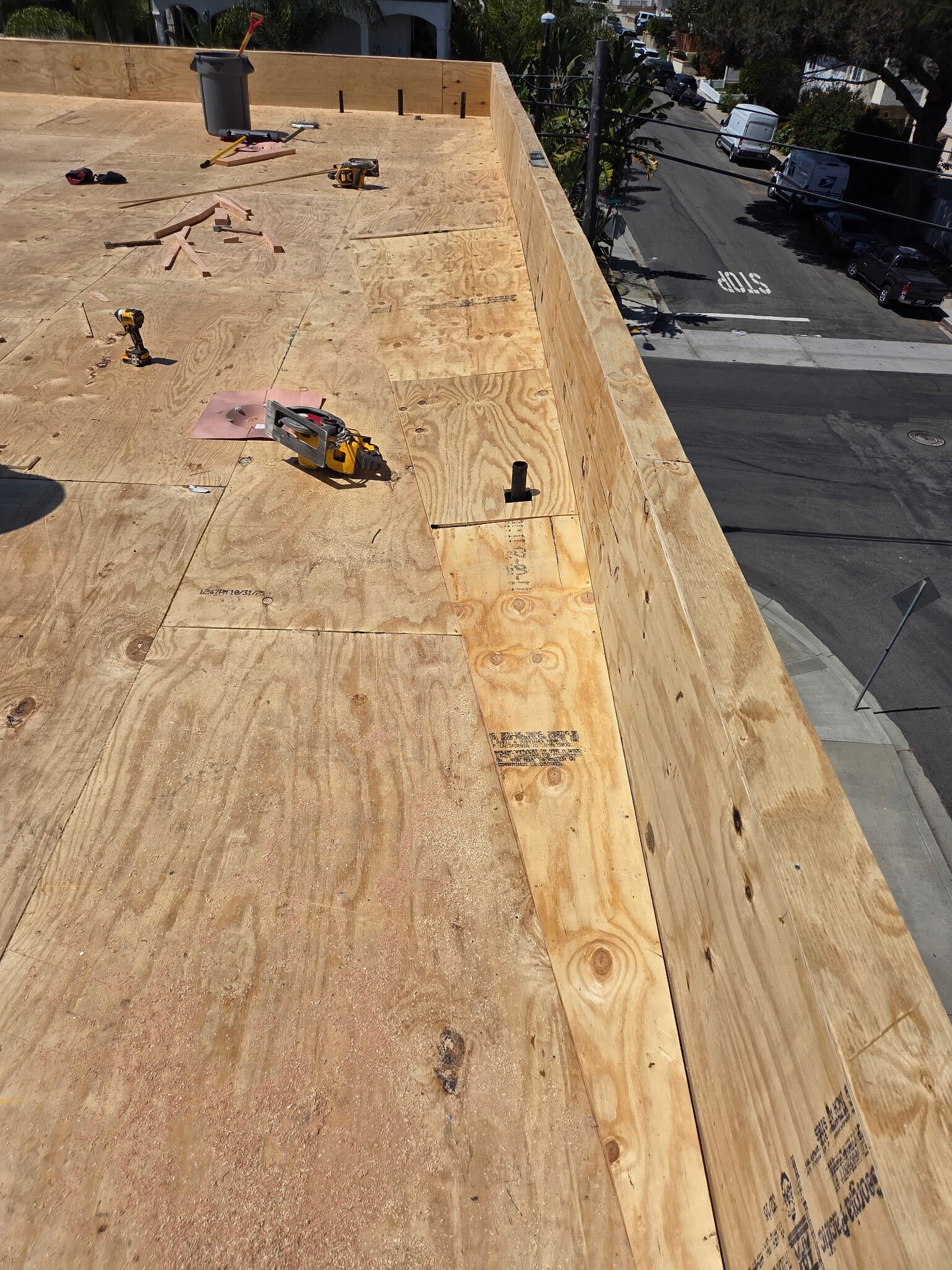
In this photo, the cricket is being framed and sheeted along the parapet edge. The goal is simple: eliminate the dead zone where water would otherwise sit against the wall. Once the roofing layers go on, this subtle slope becomes a critical part of the drainage system.
The Bigger Picture
Most issues on flat roofs are not from the field. They come from poor drainage and bad details. A cricket is a small addition that solves a big problem. It is one of those things that separates a roof that survives from one that performs.