

San Diego homeowners enjoy year-round sunshine, but changing weather patterns can put their roofs to the test. As the 2026–27 El Niño season approaches, increased rainfall and strong winds could expose hidden roofing issues, from worn flashing and brittle underlayment to clogged gutters and poor drainage.
While El Niño does not guarantee severe storms, preparing early can help prevent leaks, water damage, and costly emergency repairs. At Ford Roofing, we’ve helped hundreds of San Diego homeowners prepare for unpredictable weather. Here’s what the 2026–27 advisory could mean for your roof and how to prepare.
The El Niño Effect: What San Diego Homeowners Need to Know
El Niño is a natural climate pattern that develops when ocean temperatures in the tropical Pacific become warmer than normal, influencing atmospheric circulation and changing weather patterns worldwide. It is one phase of the El Niño- Southern Oscillation (ENSO), a natural climate cycle that also includes La Niña and neutral Conditions. For Southern California, El Niño often increases the odds of a wetter-than-normal winter because changes in Pacific Ocean Temperature and Atmospheric circulation can influence where winter storms travel.
For winter 2026-27, El Niño is already underway rather than simply a possibility. NOAA’s Climate Prediction Center issued an El Niño Advisory on August 13, 2026, reporting that conditions are present and expected to strengthen. NOAA also reported July sea surface temperatures in the central Pacific running 1.4°C above average and placed the likelihood of a very strong El Niño during fall and winter at more than 90%. However, El Niño changes the odds; it does not determine exactly when storms will arrive and how much rain each storm will produce, or where the heaviest rainfall will occur. Still, stronger El Niño conditions can increase the potential for wetter-than-normal weather across Southern California, which is important for homeowners preparing their roofs.
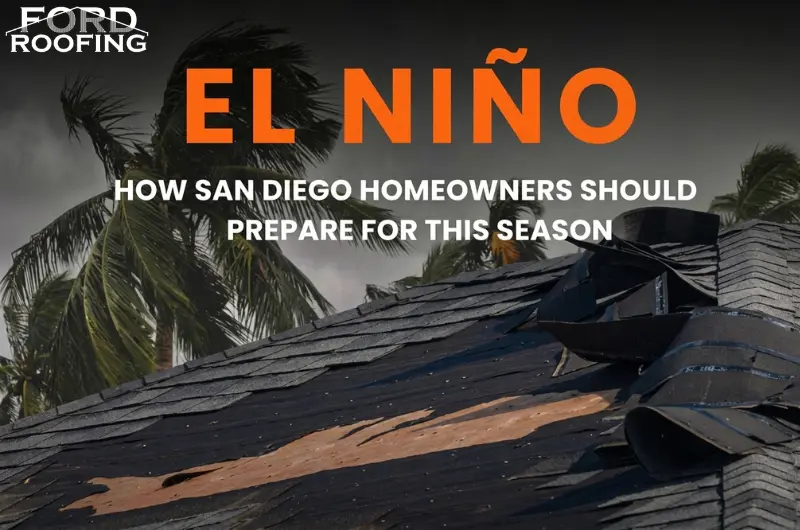
El Niño does not directly damage your roof, but the wetter and potentially stormier conditions associated with it can put additional stress on roofing systems. More frequent or heavier rainfall can expose existing weaknesses, including cracked or missing tiles, damaged shingles, deteriorated flashing, and worn seals around vents and other roof penetrations. If these issues are left unaddressed, water can find its way beneath the roofing materials and cause leaks, moisture damage, or deterioration of the underlying structure.
What El Niño Winters Have Historically Meant for San Diego Rainfall
Historical records from the National Weather Service show that past El Niño periods have coincided with significant rainfall, flooding, and debris flows in Southern California. During the 1972–73 El Niño, heavy January and February storms produced widespread flooding and mudslides, with several locations receiving multiple inches of rain. During the 1976–77 El Niño, a major September 1976 storm associated with Tropical Storm Kathleen produced record rainfall and flooding across parts of Southern California, including significant impacts in the desert. The 1977–78 El Niño also brought damaging rainfall to the region; near Borrego Springs, heavy rain triggered debris flows and flooding that damaged homes. These events illustrate the types of extreme weather that can occur during an El Niño period, but they do not predict how much rain San Diego will receive during winter 2026–27.
How El Niño Weather Damages San Diego Roofs
El Niño itself does not damage a roof. The concern is the weather pattern it can produce. After months of intense sunlight and limited rainfall, roofing materials may already be weakened or deteriorated when the wetter season begins. When repeated storms bring heavier rain and stronger winds, they can expose or worsen existing problems, including sun-damaged materials, flashing failures, salt-air corrosion, ponding water, and hidden damage to the roof deck or framing.
Understanding how these vulnerabilities respond to prolonged rain and wind can help San Diego homeowners identify potential problems before they turn into costly roof repairs.
Sun Damage and Thermal Shock
San Diego roofs are exposed to intense UV for most of the year, which gradually weakens materials. When a sudden, torrential downpour occurs during an El Niño winter, sun-damaged roofs may fail due to rapid temperature changes and heavy rainfall. Cracks develop in dried-out sealant around vents and chimneys, allowing moisture to enter. Homeowners typically miss these microscopic weak points because they’re invisible from the ground.
Thermal shock happens when cold rainwater hits a roof that has been baking in the sun for months. As materials expand and contract, shingles start curling as adhesives crack. Older asphalt roofs are particularly susceptible to damage because they lose their flexibility over time. You won’t notice these tiny shifts from the ground, but they can quickly lead to multiple leaks during a storm. Regular roof inspections can help homeowners identify hidden issues early.
Sustained Rain vs. San Diego’s Usual Short Storms
Most San Diego roofs are built to handle quick downpours or overnight showers, but El Niño can bring longer periods of rain, including atmospheric rivers lasting two, three, or more days. A roof that handles a short storm may struggle after days of continuous or intermittent rainfall, especially when underlayment becomes saturated and fasteners, seams, or flashing begin to deteriorate.
Sustained rain gives water time to find small cracks, failed sealants, damaged materials, and weak points that brief storms may never expose. Poor drainage can also cause water to collect, increasing pressure on aging roofing systems and revealing problems hidden during San Diego’s typically dry conditions.
Wind-Driven Rain and Flashing Failures
Flashing is the thin metal or membrane installed to seal joints around chimneys, skylights, walls, and roof edges. During El Niño storms, gusty and shifting winds push rain horizontally, driving water under tiles, shingles, and poorly sealed flashing. High winds can also lift or damage roofing materials, exposing the underlayment beneath.
When flashing is damaged, corroded, loose, or improperly sealed, wind- driven rain can penetrate the roofing system. Over repeated storms, even a small flashing failure can allow moisture to seep beneath the roof, potentially leading to leaks and further damage.
Salt Air Corrosion on Coastal Homes
Living near the coast means your home is constantly exposed to salty sea air that accelerates the deterioration of metal roofing components. Flashing, liners, and fasteners degrade much more quickly in coastal neighborhoods than in inland San Diego areas. Over time, salt exposure, humidity, and persistent winds can weaken these parts, sometimes without visible signs from the ground. During an El Niño winter, heavier or longer-lasting rainfall can turn these weakened areas into leak paths. Rusted fasteners may loosen, while corroded flashing can develop gaps or pinholes, allowing water beneath the roof.
Ponding Water on Flat and Low-Slope Roofs
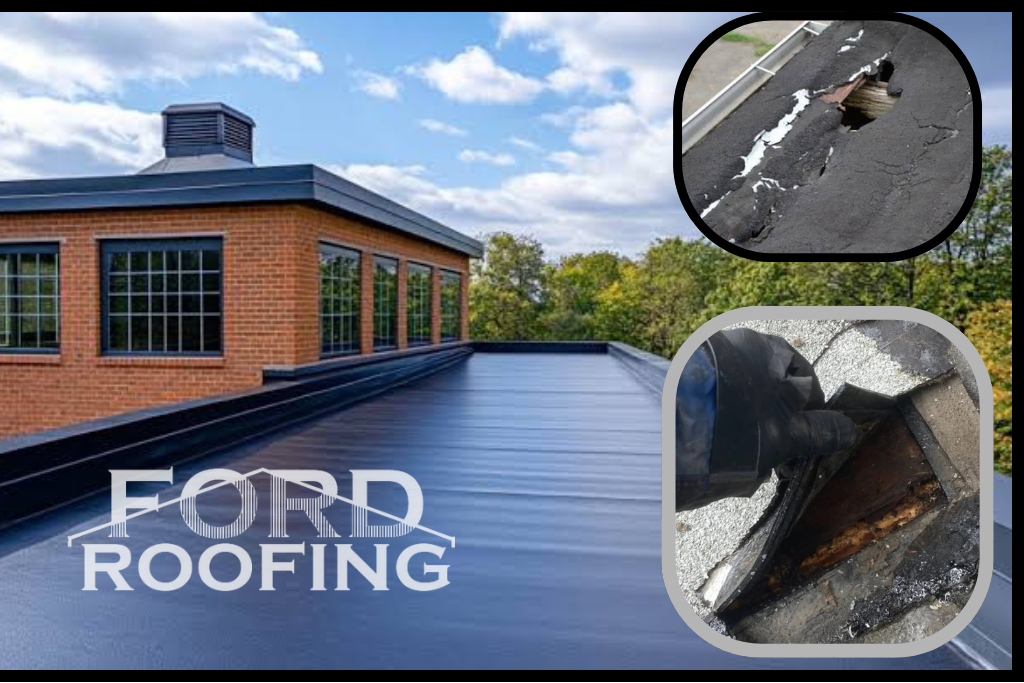
Ponding water is water that remains standing on a roof surface for more than 48 hours after rainfall ends. Many San Diego commercial buildings and mid-century homes feature flat or low-slope roofs with scuppers and internal drains that can clog with leaves, palm fronds, and other debris during El Niño storms. Blocked drainage can cause water pooling, increasing stress on roofs and accelerating seam deterioration on modified bitumen and torch-down systems. Flat roofs can sag or collapse under prolonged water pooling, and pooling water on flat roofs can cause structural sagging or collapse if the load exceeds what the framing was designed to carry. Mold and algae also thrive in stagnant pools, which further degrade the protective top layers. Clearing drainage systems before the wet season is not optional.
Hidden Dry Rot and Waterlogged Decking
Many older homes have hidden structural problems, such as termite damage, dry rot, or years of slow water intrusion, that may go unnoticed during dry weather. When El Niño brings prolonged or heavier rainfall, these weaknesses can become much more serious. Water can saturate already-compromised wood, causing it to swell and further reducing the strength of rafters and roof framing. Heavy roofing materials, especially concrete tiles, can add even more weight when wet. If the roof deck or framing is already weakened, the added moisture and load can contribute to roof sagging or, in severe cases, partial structural failure.
How Can I Prepare My San Diego Roof for an El Niño Winter?

El Niño shifts storm patterns across the southern United States, and Southern California often experiences a greater likelihood of wetter conditions during El Niño winters. No two seasons are alike, but San Diego homeowners should be prepared for periods when storms arrive closer together, or rainfall persists longer than usual.
Your roof is your home’s first line of defense against rain. A roof that looks perfectly fine from the driveway can still have lifted shingles, cracked tiles, worn flashing, deteriorated sealant, or moisture problems that only become apparent once rain continues for an extended period.
Schedule a Pre-Season Roof Inspection
A pre-season roof inspection can uncover problems that are difficult to spot from the ground, including cracked tiles, loose shingles, damaged flashing, worn sealants, and drainage issues. A professional inspector can also check accessible roofing components for signs of moisture intrusion or deterioration. Scheduling the roof inspection before storms gives you time to complete necessary repairs instead of discovering a problem during a storm.
Take Care of Small Repairs Before the Rain Starts
Small roof problems can become larger once repeated rainfall begins. Replace missing shingles, repair cracked or displaced tiles, fix damaged flashing, and address deteriorated sealants before the first major storms. Taking care of these issues early reduces potential entry points for water and can help prevent a minor roofing defect from becoming an active leak when your roof is exposed to prolonged rainfall.
Consider Whether Your Roof Is Ready for the Season
Roof age alone does not determine whether your roof is prepared for an El Niño winter. Its material, maintenance history, previous repairs, sun exposure, salt-air exposure, and current condition also matter. If your roof is older, has recurring leaks, or shows widespread deterioration, it is better to have it evaluated before the rainy season. The inspection can help determine whether minor repairs are sufficient or whether more extensive work is warranted.
Clear Your Gutters, Downspouts, and Drainage
Clear gutters, downspouts, drains, and scuppers before the rainy season so water can move away from your roof efficiently. Leaves, dirt, and debris can obstruct drainage, causing water to back up or remain on the roof. Check that downspouts discharge water away from your home’s foundation. Proper drainage becomes particularly important during prolonged rainfall because blocked pathways can contribute to standing water and increase moisture exposure.
Check Your Attic and Ceilings Before the First Storm
Inspect accessible attic areas and interior ceilings for signs of previous moisture intrusion before the first major storm. Look for damp insulation, darkened wood, water stains, bubbling paint, peeling surfaces, or musty odors. These clues can point to an existing roof problem that needs attention. Photograph any existing stains or damage to create a clear record and distinguish old problems from new damage after a storm.
Secure Loose Items Around Your Home
Secure patio furniture, decorations, lightweight structures, and other loose items that could be moved by strong winds during an El Niño storm. Also check trees near the roof and trim dead or weakened branches where appropriate to reduce the risk of falling debris. Keeping the surrounding property secure helps reduce additional hazards during periods of wet and windy weather.
What Should I Do After an El Niño Storm?
After an El Niño storm, your home may look fine at first, but heavy rain and strong winds can leave behind damage you don’t notice right away. A careful inspection can help you identify issues early and prevent more expensive repairs.
- Inspect Ceilings, Walls, and Floors: Check your home for water stains, damp patches, peeling paint, bubbling drywall, warped floors, or musty odors. These signs may indicate that water has entered through the roof or walls.
- Check the Attic Safely: If it is safe to enter the attic, look for wet insulation, dripping water, mold, or damaged wood. Do not enter if there is standing water, visible structural damage, or an electrical hazard.
- Look for Exterior Roof Damage: From the ground, inspect the roof for missing or broken shingles, damaged flashing, fallen branches, or other visible roof problems. Avoid climbing onto the roof yourself, especially after severe weather.
- Limit Additional Interior Damage: Place containers beneath active leaks and move furniture, electronics, and other valuables away from affected areas. If water is near electrical outlets or wiring, avoid contact with the area and have a qualified professional address the hazard.
- Document any visible damage: Take clear photos and videos of damaged roofing, ceilings, walls, floors, and belongings. Keep records of repairs, cleanup expenses, and other storm-related costs for insurance purposes.
- Schedule a professional roof inspection: Even if you don’t see obvious damage, consider scheduling one after a major storm. A qualified San Diego roofing contractor can identify hidden damage and recommend appropriate repairs before minor issues become more serious.
- Address leaks promptly: Act quickly when you notice a roof leak to prevent further water damage, mold growth, and structural problems. Use temporary measures to contain water when safe, and arrange for professional repairs as soon as possible.
Work With Local Roofing Experts
Preparing your San Diego roof for an El Niño winter starts with identifying problems before prolonged rainfall exposes them. A professional inspection can uncover damaged roofing materials, worn flashing, drainage issues, and other vulnerabilities that are easy to miss from the ground.
Choosing a trusted roofing contractor who understands the local climate and the potential effects of El Niño is important. At Ford Roofing, we offer comprehensive inspections and maintenance services to prepare your home for shifting weather patterns. Our team can identify brittle underlayment, clear drainage blockages, and reinforce weak flashing before storms arrive. Taking action now can help keep your family and home safe during intense weather.
We have decades of experience servicing San Diego homes, and we’ve built a reputation for providing high-quality repairs and transparent quotations. Our fully licensed and knowledgeable team of roofers can handle everything from minor shingle replacements to complete system overhauls. It’s time to start preparing for winter, so contact us to schedule an inspection. We’ll help you protect your home and keep your roof in pristine condition for years to come.